
- Full name: Roberto De Zerbi
- Age: 46
- Date of birth: June 6, 1979
- Height: 5ft 7
- Place of birth: Brescia, Italy
- Nationality: Italian
Roberto De Zerbi was appointed as Tottenham Hotspur manager at the start of April to replace Igor Tudor, who left his interim role after 44 days.
The Croatian was unable to oversee a Premier League victory during his short stint in charge. In fact, Spurs only won one match in total during his tenure, which came against Atletico Madrid in the Champions League.
Mauricio Pochettino appeared to be the favourite to become the next Tottenham manager, but those rumours petered out over time with the Argentine having been committed to leading the USA into the World Cup. Instead, it was De Zerbi who was chosen to lead the club forward, after signing a five-year contract.
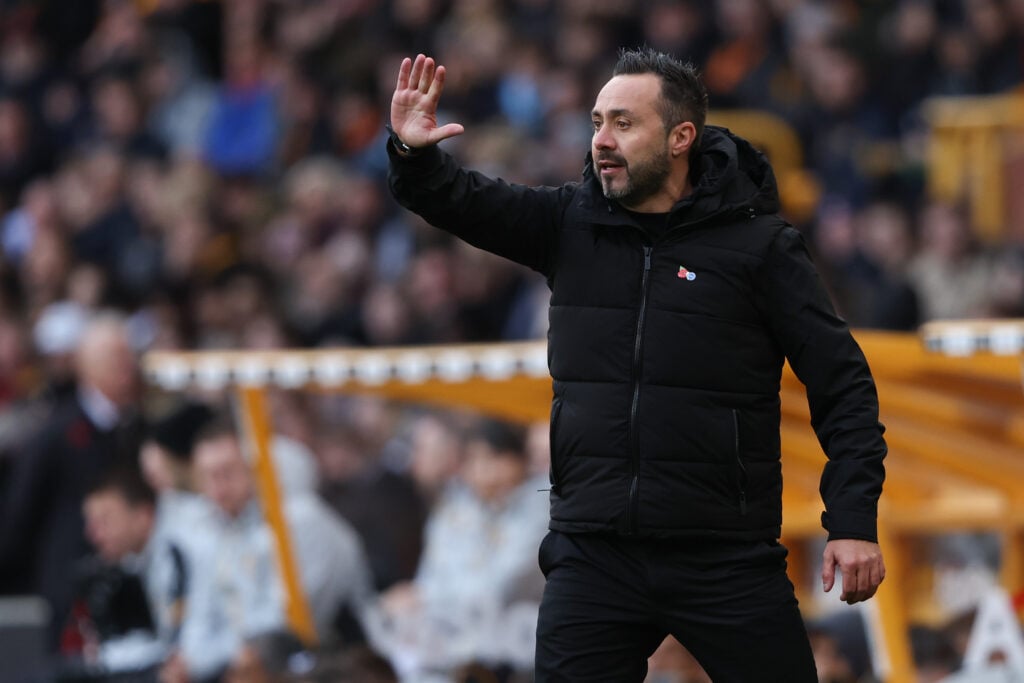
Roberto De Zerbi’s coaching career
De Zerbi spent one-and-a-half seasons at Olympique Marseille, helping the club to a second-place Ligue 1 finish in his first season.
This season has not been so straightforward, with the French side suffering a league phase exit in the Champions League. Following a 5-0 domestic defeat against PSG in February, the manager was relieved of his duties.
Prior to this, De Zerbi was in charge of Brighton & Hove Albion, where he gained quite a reputation as a top-class manager.
The Seagulls recorded their highest-ever finish in the Premier League table under De Zerbi, and he later led them to the Europa League last 16 stage.
As well as this, the Italian boss was just a penalty shootout win away from taking Brighton to the FA Cup final in 2023. Later that year, he won the Best European Coach at Tuttosport’s Golden Boy Awards.
De Zerbi began his career in management a decade earlier and he took charge of various Italian clubs before making the leap to Shakhtar in 2021.
When he left the club a year later due to the war in Ukraine, Shakhtar were top of the Ukrainian Premier League.
Roberto De Zerbi’s coaching career timeline
- 2026 – Present: Tottenham Hotspur
- 2024 – 2026: Olympique Marseille
- 2022 – 2024: Brighton & Hove Albion
- 2021 – 2022: Shakhtar Donetsk
- 2018 – 2021: Sassuolo
- 2017 – 2018: Benevento
- 2016: Palermo
- 2014 – 2016: Foggia
- 2013 – 2014: Darfo Boario
| Club | Period at club | Matches | W | D | L | PPG |
| Marseille | 01/07/2024 – 11/02/2026 | 69 | 39 | 8 | 22 | 1.81 |
| Brighton | 18/09/2022 – 30/06/2024 | 89 | 38 | 20 | 31 | 1.51 |
| Shakhtar | 01/07/2021 – 11/07/2022 | 30 | 20 | 5 | 5 | 2.17 |
| Sassuolo | 01/07/2018 – 30/06/2021 | 120 | 43 | 36 | 41 | 1.38 |
| Benevento | 23/10/2017 – 30/06/2018 | 29 | 6 | 3 | 20 | 0.72 |
| Palermo | 06/09/2016 – 30/11/2016 | 13 | 1 | 2 | 10 | 0.38 |
| Foggia | 01/07/2014 – 14/08/2016 | 90 | 48 | 23 | 19 | 1.86 |
| Darfo Boaria | 19/11/2013 – 30/06/2014 | 22 | 5 | 5 | 12 | 0.91 |
Roberto De Zerbi – Managerial Career (prior to his Tottenham appointment)
Roberto De Zerbi’s playing career
During his playing days, De Zerbi was an attacking midfielder who spent some of his academy years at AC Milan.
Unfortunately, he never made any appearances for the Serie A giants, due to being loaned out on six separate occasions.
Napoli were De Zerbi’s most notable club and he played there for four years, departing for CFR Cluj in 2010.
Three years later, the new Spurs manager retired and instantly transitioned into his coaching career, which has been more of a success.
In total, De Zerbi lifted four trophies as a player, the most notable of which was the Romanian top flight.
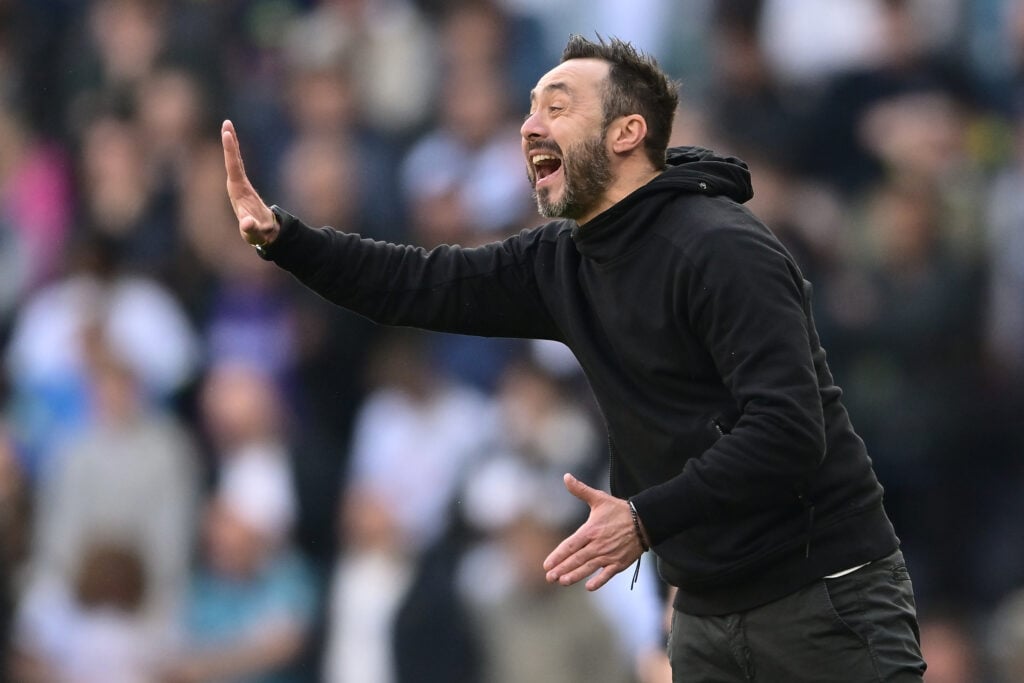
What to expect from De Zerbi at Tottenham
De Zerbi is an attacking-minded manager who likes to build up from the back. His focus will be on getting Spurs to look more comfortable in possession, which has not been the case since Thomas Frank’s involvement with the club.
The manager enjoyed developing young talents at Brighton and he will do the same at Tottenham. New signings have been necessary with the big money arrivals of Sandro Tonali and Matheus Fernandes, but De Zerbi will be keen on improving the existing players in the Tottenham first-team squad.
De Zerbi’s first aim was to keep Spurs in the Premier League in the 2025/26 season which he managed to do, but will now have eyes for making the team a force in Europe again. ,